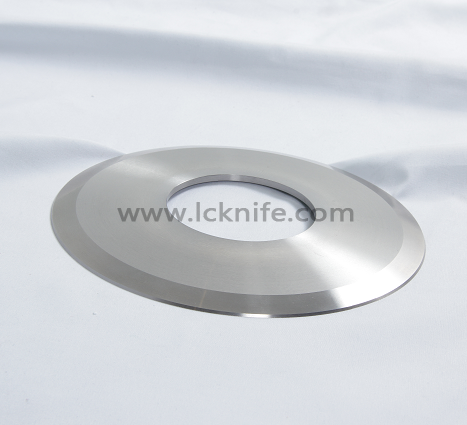
In modern industrial production such as papermaking, printing, packaging, and film processing, the slitting stage directly determines the quality and appearance of the final product. As a core consumable part in slitting equipment, the performance of the Paper Cutting Slitter Knife (industrial slitter blade/circular knife) often serves as the critical differentiator in product quality.
Many factories frequently encounter issues during production, such as rough edges, excessive paper dust, frequent blade chipping, or short service life. Behind these pain points are often improper selection of slitting tools or a lack of deep understanding of their core influencing factors. This article will provide an in-depth analysis of how to select high-quality Paper Cutting Slitter Knives and the core factors that govern industrial slitting precision.
On high-speed slitting machines, the blades must cut through various types of paper, paperboard, aluminum foil, or composite films at extremely high linear speeds. Insufficient slitting precision can lead to minor defects such as burrs, wavy edges, and tears, or major issues like paper jams at joints, misalignment, and even the scrapping of entire batches of material.
An exceptional circular slitter knife requires not only outstanding sharpness, but also extremely high stability and rigidity during high-speed shearing operations.
To evaluate and select a high-quality Paper Cutting Slitter Knife, you must focus on the following three core dimensions:
Material is the "DNA" of the tool. Different cut materials place vastly different demands on blade composition:
High-Carbon Chromium Bearing Steel (e.g., GCr15 / 52100): Offers good hardness and wear resistance with high cost-effectiveness, widely used for standard paper and film slitting.
High-Speed Steel (HSS, e.g., W6Mo5Cr4V2): Features excellent red hardness and toughness, suitable for medium-to-high speed, continuous heavy-duty operations.
Tungsten Carbide: Commonly known as hard alloy or cemented carbide, its hardness and wear resistance far exceed ordinary steel, with a lifespan up to dozens of times longer than traditional steel knives. It is the premier choice for high-hardness materials, high-speed slitting, and applications requiring extended service cycles.
Good material alone is not enough; scientific heat treatment processes (such as vacuum quenching and cryogenic treatment) are essential to fully unlock the material's potential.
Hardness Index: The surface hardness of premium circular slitter knives typically ranges between HRC 58 and 64.
Uniformity: The overall hardness distribution of the blade must be highly consistent. Uneven quenching can cause minor deformation or localized chipping under the high heat generated during high-speed rotation, leading to unstable slitting clearances.
The blade edge design and machining accuracy directly dictate the stress state during the shearing moment.
Grinding Angle: Based on paper basis weight, thickness, and the slitting method (the coordination between top circular and bottom bottom knives), the edge angle must be precisely calculated (typically between 30° and 60°). An angle that is too large can crush the paper, while one that is too small compromises durability.
Runout Tolerance: High-end Paper Cutting Slitter Knives demand extremely strict tolerance control on radial runout and axial (face) runout during manufacturing (typically at the micron level). Minute runout deviations are magnified exponentially during high-speed rotation, triggering vibrations and uneven cuts.
In modern industrial manufacturing, choosing a high-quality Paper Cutting Slitter Knife is essentially purchasing an "insurance policy of efficiency and stability" for your production line. It not only reduces the frequency of downtime for blade changes and lowers overall consumable costs, but also acts as an invisible driving force to guarantee the texture of end products and enhance a company's market competitiveness.
Ma'anshan Licheng Blade Manufactory


 IPv6ネットワーク対応
スキャンをwechat: